Article II 2/2026 - STRENGTHENING SMALL-SCALE FISHERY SUPPLY CHAINS IN SOUTHEAST ASIA: PATHWAYS TO INCLUSIVE GROWTH
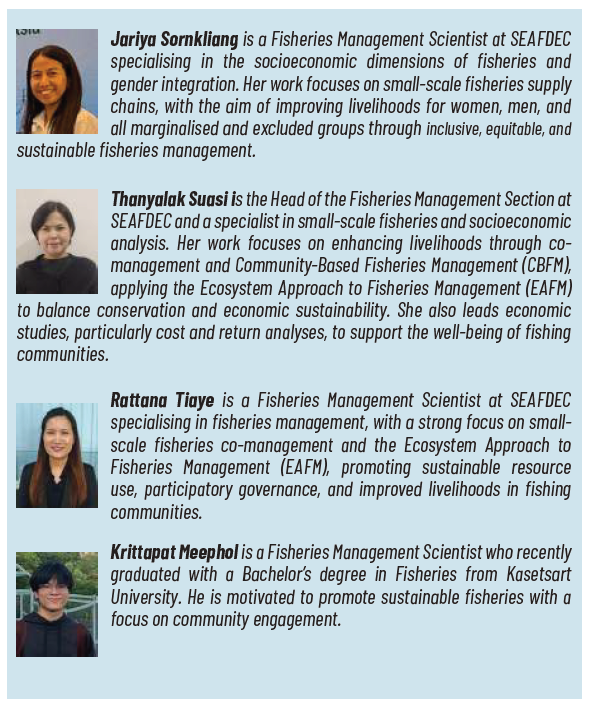
By Jariya Sornkliang, Thanyalak Suasi, Rattana Tiaye and Krittapat Meephol
Southeast Asia’s small-scale fisheries are impacted by a confluence of systemic challenges, including market power imbalances involving middlemen; post-harvest infrastructure deficits; financial and informational exclusion; entrenched gender inequality, mounting environmental and climate pressures; and critical gaps in standards and traceability. Focusing on small-scale fisheries (SSF) value chains across SEAFDEC Member Countries in Southeast Asia, this article highlights the urgency of transformation aligned with the Resolution and Plan of Action on Sustainable Fisheries for Food Security for the ASEAN Region Towards 2030 (RES & POA-2030) in dealing with such challenges. It presents strategic recommendations to build resilient, inclusive, and sustainable aquatic food systems for regional food security and equitable livelihoods.
Image
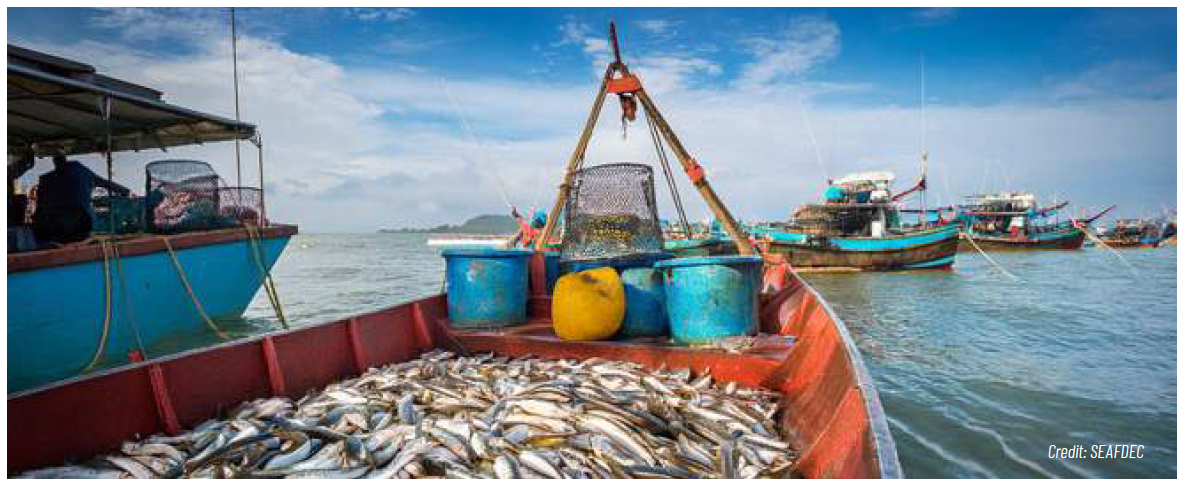
Small-scale fisheries (SSF) are essential for food security, poverty reduction, and sustainable livelihoods across Southeast Asia. Characterised by low capital investment, labour-intensive operations, and strong family involvement, SSF contribute significantly to regional fish production and employment (FAO, 20221). In countries such as Indonesia, the Philippines, Thailand, and Viet Nam, SSF underpin both the national food supply and the socio-economic resilience of coastal and rural communities (SEAFDEC, 20232). However, their true contribution is often underestimated due to informal practices and limited data (Pomeroy, 20113).

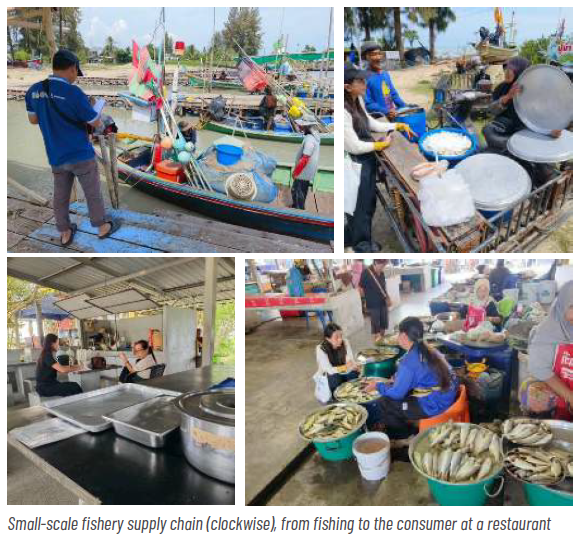
SSF supply chains spanning harvesting, processing, distribution and marketing are complex and culturally embedded. These chains rely on a diverse network of fishers, traders, processors, middle agents, and retailers who operate with uneven access to information, capital, and markets (Kawarazuka et al., 20104). Despite providing critical employment, SSF supply chains face persistent constraints, including limited infrastructure, inadequate cold chain systems, and weak market integration, making them vulnerable to environmental and economic shocks (FAO, 2022; Bush et al., 20195). With increasing pressures from climate change, resource competition, and shifting market demands, strengthening SSF supply chains has become urgent. Improved supply chain systems can enhance livelihoods, reduce post-harvest losses, support value-addition, and promote greater equity, particularly when women, youth, and marginalised groups are fully included (Béné et al., 2016; Tilley et al., 20216).

These improvements align with the ASEAN Resolution and Plan of Action Towards 2030 (RES & POA-2030), which provides the overarching policy framework for this endeavour. It mandates that fisheries must contribute decisively to food security and livelihoods while ensuring sustainable resource use. Crucially, it calls for the explicit support of small-scale fisheries within an ecosystem-based and participatory management framework. In this context, the Japanese Trust Fund Program VII (JTF 7) on improving fishers’ livelihoods and co-management in small-scale fisheries includes targeted activities to enhance SSF supply chains, aiming to increase incomes, improve product quality, expand market access, and strengthen community resilience in the community through improvement of the supply chain.
Image

Understanding the supply chain and value chain
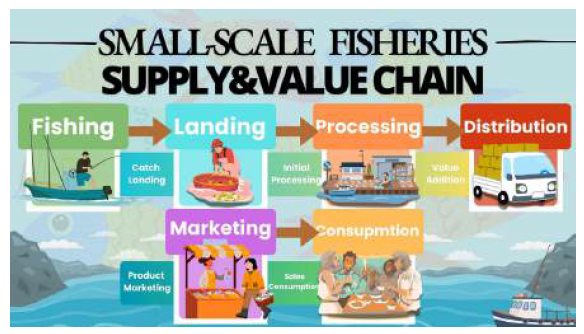
A foundational step is distinguishing between two key concepts often used interchangeably:

The supply chain refers to the physical flow of the product from inputs and production through processing, distribution, and finally to the consumer. The primary goal here is efficiency: reducing losses, optimising logistics, and cutting costs.

The value chain analyses the sequence of activities within that flow to identify where and how value is added at each step. The goal shifts to enhancing profitability, competitiveness, and stakeholder benefit.

In essence, the supply chain maps the journey of the fish while the value chain seeks to make that journey more rewarding for everyone involved, especially the primary producers. Fisheries officers should be equipped with this analytical lens to drive meaningful interventions.
Image

National snapshots and key concerns

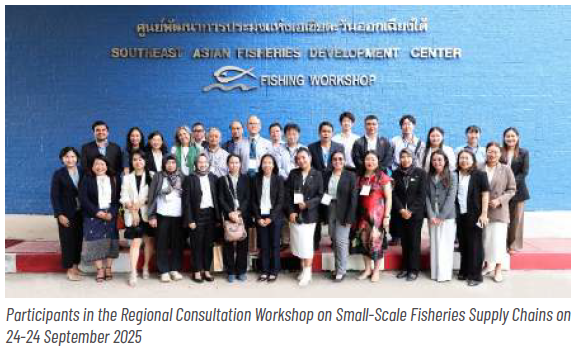
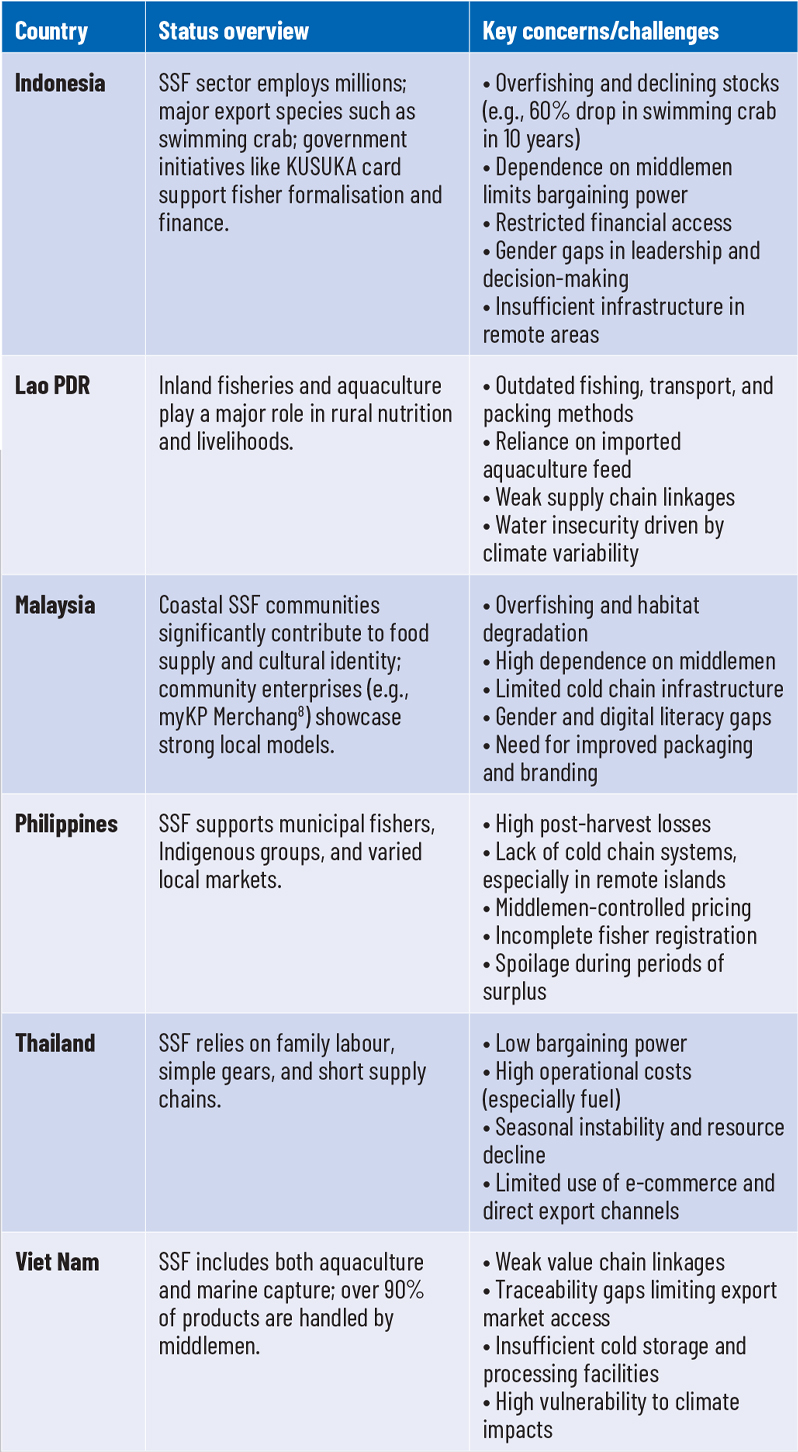
In September 2025, the Southeast Asian Fisheries Development Center (SEAFDEC) organised a consultation workshop on the small-scale fisheries supply chain to gather the status and key concerns from six Member Countries. A country-by-country analysis reveals diverse small-scale fisheries (SSF) contexts across Southeast Asia; yet, all share common vulnerabilities linked to resource pressures, market limitations, and socio-economic inequities.

• In Indonesia, SSF remain a major employer and food source, supported by initiatives like the KUSUKA card7 but face severe overfishing, dependence on middlemen, gender inequality, aging labour, and weak infrastructure;

• Lao PDR relies heavily on inland fisheries and aquaculture, constrained by outdated practices, small-scale production, dependence on imported feed, climate-induced water insecurity, and poorly integrated supply chains;

• In Malaysia, the Coastal Zone A (five nautical miles from the shore) fishers anchor SSF production, with promising community enterprises emerging, though the sector struggles with resource degradation, strong middlemen influence, inadequate cold chain systems, limited gender inclusion, and low value-added processing;

• The Philippines supports millions of municipal fishers through subsidies and livelihood programs, yet continues to face high post-harvest losses, insufficient cold chains, technical gaps, price suppression by middlemen, and unclear supply chains in remote regions;

• Thailand’s SSF, reliant on family labour and short supply chains, is hindered by low bargaining power, rising fuel costs, seasonal fluctuations, and limited access to online and export markets; and

• Viet Nam, with its strong aquaculture base, contends with weak value chain linkages, middlemen dominance over 90% of trade, traceability issues hindering EU exports, insufficient processing capacity, and high climate vulnerability.
Image
Table 1: Status and key concerns in SEAFDEC Member Countries
Image

A synthesis of cross-cutting regional concerns

From these national profiles, interconnected challenges emerge as a common regional issue.

Market power imbalance: Overwhelming dependence on middlemen, leading to low bargaining power and reduced income for fishers;

Post-harvest deficits: Weak cold chain and processing infrastructure, resulting in significant physical and quality losses;

Financial and informational exclusion: Limited access to credit, insurance, and real-time market information for fishers;

Gender inequality: The critical role of women in processing and trade is often undervalued, with limited participation in decision-making;

Environmental and climate pressures: Stock declines, overfishing, pollution, and climate change-induced fluctuations threaten resource sustainability; and

Standards and traceability gaps: Difficulties in meeting certification requirements for premium export markets, linked to opaque supply chains.

Case studies in value chain innovation

Amidst these challenges, successful models point the way forward. These case studies demonstrate that improvement is possible through focused intervention.

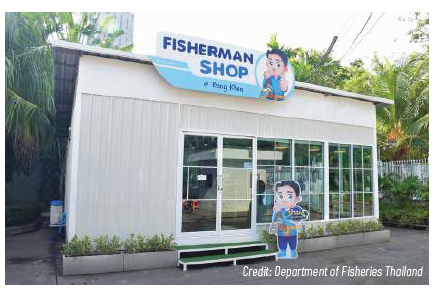
“Fisherman Shop” (Thailand): A government-led initiative that strengthens value chains by ensuring quality, facilitating certification, and creating direct market access for fishers, bypassing traditional intermediaries.

“Pla Organic Social Enterprise” (Thailand): A model aimed at empowering small-scale fishing communities through ownership of a seafood supply chain, as well as building their capacity on post-harvest management up to organic certificate level. Participating communities also have the opportunity to operate a retail seafood outlet in Bangkok, while educating consumers on sustainable fishery resources utilisation.

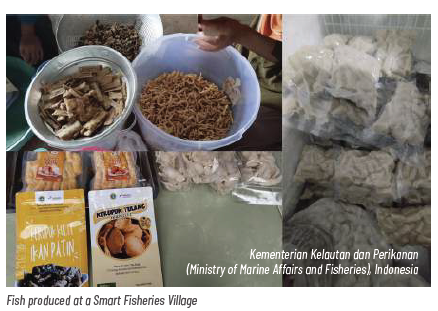
“Smart Fisheries Village” (Indonesia): Piloted in Mariana, South Sumatra, this model leverages a community-based approach to modern fish processing, innovative packaging, and digital marketing, directly increasing local incomes and market reach.

From these examples, five distinct categories of good practice emerge. First is a focus on quality and certification through improved hygiene and sustainability labels. Second, producers are engaging in value-added processing to diversify their products. Third, they are securing improved market access via cooperatives and digital tools. Fourth, inclusive, community-based approaches are empowering women and strengthening collective action. Finally, strategic investments in governance and infrastructure, such as cold storage and market systems, underline these advancements.

Recommendations for action

To address cross-cutting challenges and scale good practices, a coordinated strategy for SEAFDEC stakeholders should focus on three strategic pillars:

A. Empower producers and improve efficiency
• Strengthening cooperatives: Aggregate produce and bargaining power.
• Upgrade infrastructure: Invest in cold storage and processing to reduce post-harvest losses.
• Add value locally: Support training for product diversification (e.g., fillets, ready-to-cook items).

B. Enhance market integration and value
• Build trust and brand: Promote group certifications and affordable digital traceability for “SEAFDEC-region SSF” brands.
• Expand market access: Develop digital marketplaces and direct sales channels to retailers and exporters.
• Increase financial access: Create tailored credit/insurance and sustainability-linked incentives.

C. Ensure supportive and equitable systems
• Mainstream gender equity: Integrate gender analysis and create targeted opportunities for women.
• Align policy and governance: Harmonise national policies with the RES & POA-2030 and foster multi-stakeholder partnerships.
• Scale success: Systematically document and facilitate the exchange of proven models for regional adaptation.
Image

Conclusion

Image
The sustainable future of Southeast Asia’s small-scale fisheries hinges on transforming its supply chain from systems of vulnerability to engines of resilience and equity. This requires moving beyond isolated projects to an integrated regional strategy that is grounded in the RES & POA-2030, informed by robust gender and socio-economic analysis, and committed to participatory, community-led development. By investing in infrastructure, market access, financial inclusion, and, most importantly, in the people who depend on these waters, SEAFDEC and its Member Countries can secure a future where aquatic food value chains are not only strong and efficient but also just, inclusive, and sustainable for generations to come.

Other references

• Food and Agriculture Organization of the United Nations. (2015). Voluntary guidelines for securing sustainable small-scale fisheries in the context of food security and poverty eradication. FAO. https://doi.org/10.4060/i4356en
• SEAFDEC. (2025, September 24–26). Regional consultation workshop on the study of the small-scale fisheries supply chain in Southeast Asia [Workshop report]. SEAFDEC/TD, Samut Prakan, Thailand.
The authors gratefully acknowledge the participation by representatives from SEAFDEC Member Countries (Indonesia, Lao PDR, Malaysia, Philippines, Thailand, and Viet Nam); and partners from the Food and Agriculture Organization of the United Nations (FAO), the Department of Fisheries, Thailand (DOF), Too Big To Ignore (TBTI), the Research Institute for Inland Fisheries and Extension (RIIFE) Indonesia, and Pla Organic Enterprise Company Limited. Insights from resource persons at the Japan Fisheries Research and Education Agency (FRA), Kasetsart University, and Mahidol University during the Regional Consultation Workshop on Small-Scale Fisheries Supply Chains are also sincerely appreciated.

ADVERTISEMENTS

Image
Image
Image
Image
Image
Image
Image
Image
Image
Image
Image
Image
Image
Image
Image

©2026 INFOFISH. ALL RIGHTS RESERVED. DESIGNED BY INFOFISH